
Modern Quick Service Restaurant (QSR) concepts are evolving to meet changing customer expectations, with convenience, efficient service, and flexible ordering options playing an increasingly important role. For franchise investors, these models offer different ways to enter the restaurant industry, depending on investment budgets, location requirements, and operational goals.
This guide explains what defines a modern QSR concept, explores the available restaurant formats, and outlines the key costs and factors investors should evaluate before choosing a franchise. It also examines Tabla’s Express franchise model, part of a restaurant brand operating since 2008, and how this compact format fits into the changing quick-service restaurant landscape.
What Defines a Modern QSR Concept?
Modern QSR concepts focus on speed, convenience, and consistent service across in-store, takeout, delivery, and digital ordering.
According to Circana/CREST data in the National Restaurant Association’s 2025 report, off-premises orders accounted for 83% of limited-service restaurant traffic in 2024, up from 76% in 2019. These trends are shaping QSR menus, technology, and restaurant layouts.
| Channel | Share of limited-service traffic, 2019 | Share in 2024 |
| Drive-thru | 41% | 43% |
| Takeout | 31% | 31% |
| Delivery | 4% | 9% |
Takeout held flat and drive-thru barely moved. Delivery more than doubled, and that is the channel that forces a kitchen to be designed differently.
Efficient Service and Convenient Ordering
A modern quick-service operation has to serve a walk-in customer, a drive-thru queue, a mobile pickup order and a courier without any one of them stalling the others. The National Restaurant Association found 94% of off-premises customers say speed is critical, which leaves little room for a channel that backs up.
Mobile ordering is now mainstream rather than emerging. It is used by 57% of adults, rising to 74% of millennials and 65% of Gen Z adults.
Streamlined Menus and Kitchen Operations
A shorter menu is one of the main operational levers in this format. Fewer items means fewer prep stations, shorter training and more predictable ticket times across every channel.
That matters more as delivery grows, since a courier order has to be assembled while counter orders keep moving.
Flexible Restaurant Locations and Space Requirements
Because these formats carry less dine-in seating, they fit sites a full-service restaurant cannot use. Food courts, airport terminals, transit hubs, campus buildings and small retail units all become viable.
That flexibility cuts both ways. These sites depend on existing footfall rather than drawing their own, so the location decision carries more weight than it does for a destination restaurant.
Technology and Digital Ordering Options
Digital ordering is the infrastructure the rest of the format now sits on. The components these operations typically run:
- Mobile app and web ordering, with pickup timing tied to the kitchen queue
- Self-service kiosks, which move order entry away from the counter at peak
- Third-party delivery integration, feeding couriers' orders into the same system
- A pickup staging area, keeping completed digital orders out of the counter line
- Loyalty tied to the ordering account, which is where repeat-visit data comes from
Loyalty is not decorative here. Among drive-thru users, 65% say loyalty membership affects where they order.
Why Modern QSR Concepts Appeal to Franchise Investors
Investors look at this category for reasons that have little to do with the food. The format is compact, it carries less front-of-house staffing than full table service, and the menu is small enough to train quickly.
The wider numbers set the context. The National Restaurant Association projects total US restaurant and foodservice sales of $1.55 trillion in 2026, with 1.3% real sales growth and employment of 15.8 million.
Those conditions are not uniformly easy, and an honest assessment says so. Of operators surveyed, 42% reported their restaurant was not profitable in 2025, 60% reported softer customer traffic, and more than nine in ten named food, labour, insurance, energy and card fees as significant challenges.
There is also a segment-level signal worth knowing. The International Franchise Association's 2026 Franchising Economic Outlook expects full-service restaurants to outpace quick service in output growth this year, which argues for a differentiated concept rather than a commodity one.
Different Restaurant Formats for Different Markets
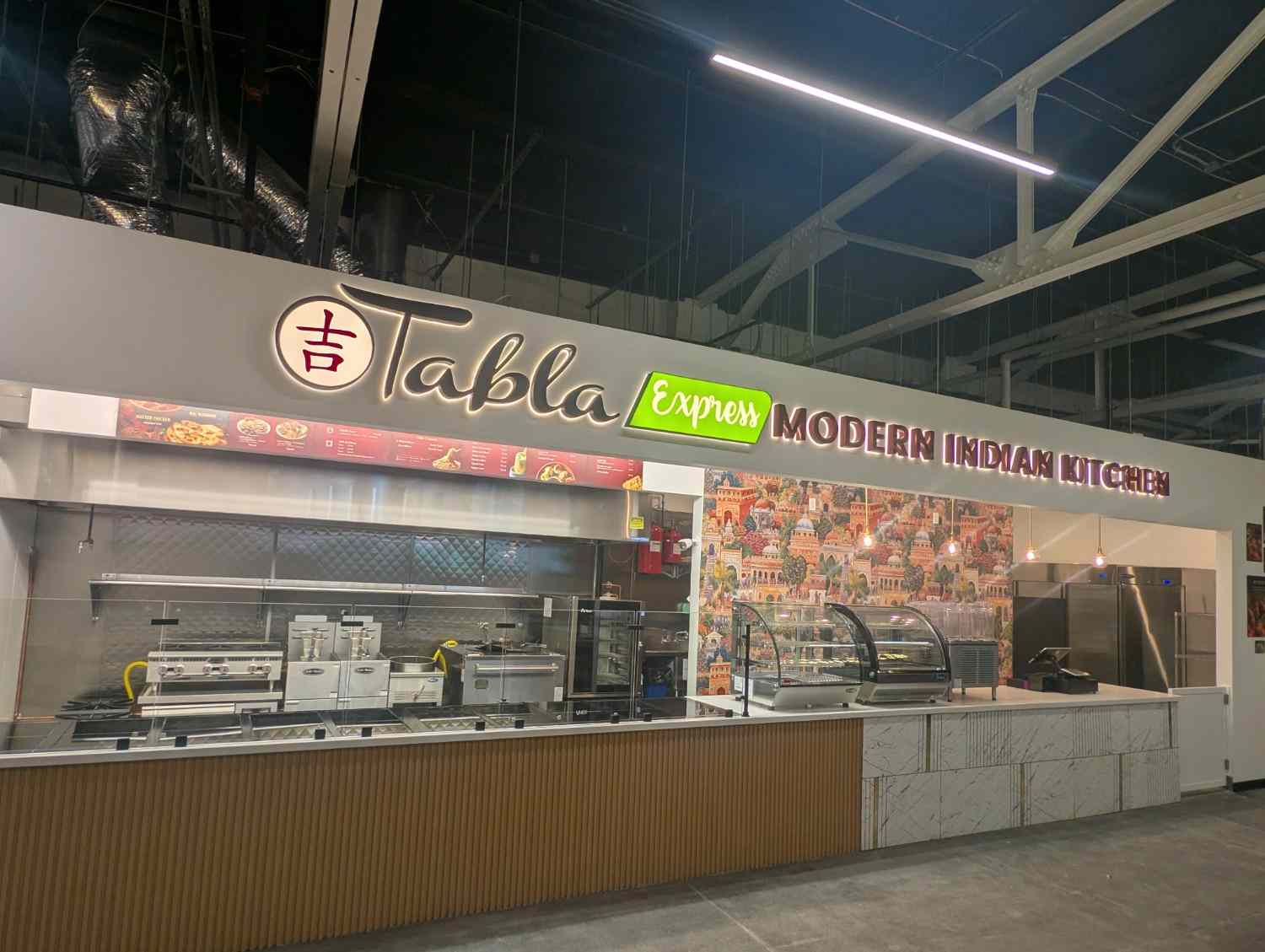
One brand operating several formats lets the capital level follow the site rather than the reverse. A food court unit and a suburban sit-down room are different businesses even under one name.
Menu Planning and Operational Efficiency
A focused menu is what makes the labour model work. It shortens training, reduces the number of SKUs in the supply chain, and keeps ticket times consistent when all four channels are firing at once.
Brand Recognition and Franchise Support
A franchise system exists to solve operational problems once and repeat the solution. What a prospective investor is buying is the menu system, the supplier relationships, the training programme and the site-selection method, rather than the name alone.
Startup Costs, Working Capital and Financial Planning
The franchise fee is usually a small share of what it takes to open. Item 7 of the Franchise Disclosure Document sets out the estimated initial investment, including the additional funds needed for the first months of trading, and that figure is the one to plan against.
Understanding the QSR Format:
The QSR format is not one template. It varies by menu depth, service style, footprint, location type and the demand profile of the trade area, and those variables tend to move together.
| Format | Customer Experience | Best Fit |
| Express / counter-service | Order at a counter or screen, collect, usually limited seating | Food courts, airports, transit hubs, campus sites |
| Fast casual | Order at a counter, food brought to the table, full menu | Lifestyle centres and mixed-use developments |
| Counter service with a drive-thru | Counter plus a drive-thru lane, which carried 43% of limited-service traffic in 2024 | Standalone sites with vehicle access |
Express and Counter-Service Restaurants
An express restaurant takes orders at a counter or kiosk, serves a compact menu and carries little or no table service. It is the version of the QSR format built for sites where footfall already exists and dwell time is short. An Express Restaurant Franchise is how a brand licenses that format to an independent operator.
Fast-Casual Restaurant Formats
Fast casual concept keeps counter ordering but brings food to the table and carries a fuller menu. It sits between express and full service on both investment and labour, and it needs a trade area with daytime and evening traffic.
Food Court, Airport and Urban Locations
These sites supply their own traffic, which is their advantage and their constraint. A unit inside a mall, terminal or campus building works within a shell and a set of operating conditions it does not control, so the lease terms deserve as much scrutiny as the trade area.
Matching the Format to Your Target Market
Two questions settle most of this. What footfall does the site already carry, and what will that specific population order repeatedly rather than once?
A format that works in an airport terminal, where most customers are passing through once, is a different proposition from one in a suburban centre built on repeat visits from the same households.
Key Factors to Evaluate Before Investing in a QSR Franchise
Five areas decide whether a QSR franchise is worth pursuing, and they are easier to compare than they look.
- Initial investment and ongoing fees. Look at the total investment range, not the franchise fee alone. Ongoing costs usually include a royalty, a brand or marketing fund, a local advertising requirement and a technology fee, each on its own basis.
- The Franchise Disclosure Document and agreement. Item 5 covers the initial fee, Item 6 every recurring charge, Item 7 the estimated initial investment, and Item 20 the franchisee contact list. A franchisor must give you the FDD at least 14 calendar days before you sign anything or pay anything.
- Site selection and lease considerations. In this format the site carries the traffic, so trade-area analysis and lease terms matter more than fit-out preferences.
- Training, marketing and operational support. Ask what is actually delivered, who it covers besides the owner, and what continues after opening.
- Local competition and market research. Count the comparable operators already inside the trade area before assuming demand is unmet.
On earnings, one point is worth stating plainly. A franchisor may only make a financial performance representation in Item 19 of the FDD, and making one is voluntary. If a brand chooses not to, Item 19 must say so in those terms, and nobody there can tell you what a location will earn.
Explore Tabla Franchise's Express QSR Model
Tabla has operated since 2008, when its first restaurant opened in Orlando, Florida, with locations now across Florida, Texas, Illinois, Kentucky, Minnesota and Massachusetts. It franchises three formats, Fine Dining, Fast Casual and Express. The Express Restaurant Franchise is the one that fits the conditions described above.
An Express Format Focused on Indian Cuisine
Tabla’s Express model applies counter-service quick service to Indian and Indo-Chinese cuisine. The QSR model investment ranges from $187,201 to $405,682, including a $36,000 initial franchise fee.
A Focused Menu Featuring Popular Indian and Indo-Chinese Dishes
The Express menu is built around the top 20 best-selling items from Tabla's wider menu, freshly prepared in small batches.
Space Requirements and Potential Location Types
Tabla positions Express for malls, food courts, airports and other high-traffic locations. Those are site types that supply their own footfall, which is the practical reason the format suits them.
Franchise Training and Support
Express franchisees receive two weeks of hands-on, one-to-one training before launch, plus on-site support through the opening period. Tabla lists six support categories for franchisees: Training, Marketing, Site Selection, Technology, Launch and Operations.
Tabla publishes one schedule of ongoing fees:
- Royalty: 6% of gross sales, weekly
- Brand development fund: 2%, weekly
- Local advertising: 2% of gross revenue, monthly, for hyper-local marketing
- Technology fee: $500 or $750 per month
The royalty and brand development fund together come to 8%. Item 6 of the Franchise Disclosure Document is where to confirm every charge and the basis each is calculated on.
Tabla does not publish revenue or profit figures for any format. Anyone evaluating returns should work from Item 19 of its Franchise Disclosure Document and from the franchisee contacts in Item 20.
What This Means for Readers and Investors
For readers exploring modern QSR concepts, the shift toward off-premises dining highlights the growing importance of takeout, delivery, and digital ordering.
For potential investors, these trends emphasize the need to evaluate operating costs, profit margins, location suitability, and customer demand before choosing a franchise. Although compact formats may reduce certain space requirements, profitability is never guaranteed.
These industry figures reflect broader trends, not predictions of how an individual restaurant will perform.
Frequently Asked Questions About the Modern QSR Concept
Frequently Asked Questions
Everything you need to know — quick answers to the questions we hear most.
Q: What Is a Modern Qsr Concept?
Q: How Does an Express Restaurant Franchise Work?
Q: What Is the Difference Between an Express Restaurant and a Traditional QSR?
Q: What Costs Should Investors Evaluate Before Opening a Qsr Franchise?
Q: What Should Entrepreneurs Consider When Choosing a Modern Qsr Concept?
Q: Which Ordering Channel Grew Fastest in Limited-Service Restaurants?
Q: How Large Is the Us Restaurant Industry?
Q: Is the Quick-Service Segment Still Growing Faster Than Full Service?
Q: Do I Need a Drive-Thru to Run a Quick-Service Restaurant?
Q: How Important Is Digital Ordering in Quick Service?
Q: What Does Tabla Franchise Offer Through Its Express Qsr Model?
Q: How Do I Start a Franchise Conversation with Tabla?
Start Your QSR Franchise Journey With Tabla
Choosing the right QSR franchise starts with finding a format that fits your investment budget, location, and business goals. With restaurant experience dating back to 2008, Tabla offers Express, Fast Casual, and Fine Dining franchise models to suit different business needs. Its Express model features a focused menu of selected dishes from the broader Tabla menu.
Explore the available franchise models and discuss which option best aligns with your goals. Visit tablafranchise.com to submit a franchise inquiry and take the next step toward owning a Tabla franchise.

Vasu Kohli
Vasu is a food and hospitality writer passionate about showcasing Tabla Indian Restaurant's franchise journey and growth. Through insightful content, she highlights what makes Tabla a compelling franchise opportunity, covering its proven business model, scalable operations, authentic culinary systems, and successful expansion across multiple states. She also brings the brand's dining experience to life by sharing stories about Tabla's authentic Indian cuisine, signature dishes, warm hospitality, and memorable guest experiences, helping readers discover what makes every visit special.